


Why Bluebell Needs More Late-Night Bus Service on Weekends
Bluebell's weekend buses stop running before most late shifts end. Here's the case for a small, specific late-night pilot — and how to push for one.
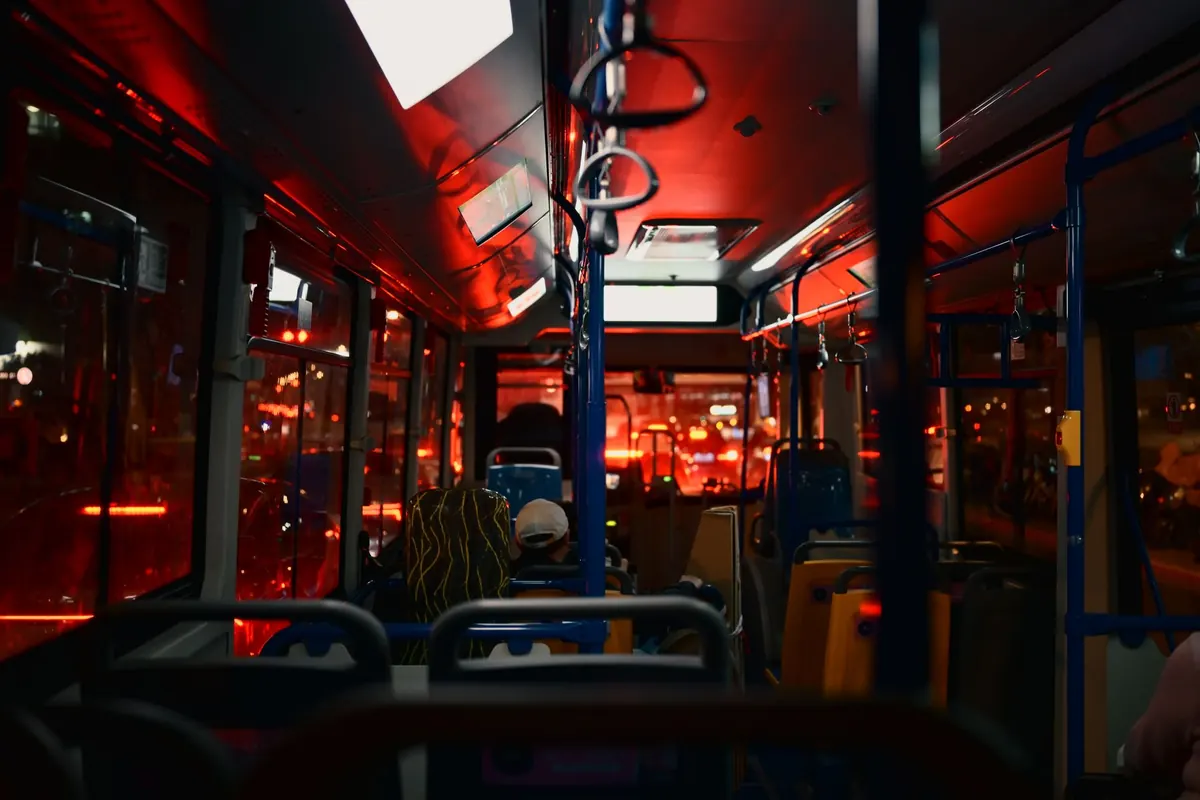
At 11:42 on a Saturday night, the last bus pulls away from the downtown transit hub with a handful of people aboard. Three hours later, the bars empty out. The hospital's overnight shift is already halfway through. Somewhere between those two moments, people in Bluebell are standing on sidewalks, weighing a long walk against a ride they can't quite afford.
That gap isn't a mystery. It's a schedule choice, and it's one of the cheapest things this city could fix.
Nobody is asking for buses every ten minutes until dawn. The ask is narrower than that: keep a few trips running past midnight on Friday and Saturday, on the routes where people actually work late.
Who is still trying to get home at 1 a.m.
Weekend transit is usually designed around the trip into downtown — the dinner, the show, the night out. The people riding home are often a different crowd entirely:
- Nurses, care aides, and hospital support staff finishing evening and overnight shifts.
- Kitchen staff, dishwashers, and servers who close, mop, and lock up after the last table leaves.
- Warehouse and industrial workers on second shift, many of them on the east side where the walk home has no sidewalk at all.
- Cleaners and security guards whose buildings empty long after the buses do.
- Students holding weekend shifts, and anyone in this town without a car.
What these jobs have in common is that the person doing them cannot simply leave earlier. The shift ends when it ends. If the last bus has already gone, the ride home becomes a car you don't own, a fare you can't justify, or forty minutes on foot in the dark. That's not a lifestyle choice. It's a missing piece of infrastructure.
The real problem isn't frequency — it's the last trip
Late-night transit debates get stuck on how often buses should run. Frequency matters far less than whether a trip exists at all. A route with four buses an hour that stops at 10:30 is useless to someone who clocks out at 12:15.
Three details decide whether a late bus is actually usable:
- When the last trip leaves. If it departs before the shifts end, the route may as well not exist for the people who need it.
- Whether transfers connect. A late bus that dumps riders at a dark corner after the connecting bus has left is worse than no bus, because it strands people further from home. Connections should be held a few minutes when the inbound bus is close.
- Whether the schedule is easy to remember. A consistent Friday-and-Saturday pattern beats a patchwork that changes with the season. Riders plan around habits, not PDFs.
Late-night service is public safety, not charity
Most of the arguments for transit at night come down to one thing: people get home without driving. That matters in a town where the alternative for a tired kitchen worker or a nurse after a hard shift is often a car, and where a night out can end with a decision nobody should have to make at 2 a.m.
It's also about the walking. Riders who miss the last bus don't vanish; they walk along roads built for cars, cross intersections with no lighting, and wait at stops nobody has thought about since the shelter was installed. Fixing that means lit stops, posted schedules, and some way to check arrival times in real time instead of standing in the cold guessing.
What downtown businesses lose when the buses stop
Every restaurant and bar owner in Bluebell knows the quiet version of this problem. Closing shifts are hard to staff. If the last bus leaves before close, the manager becomes a taxi service, or the closing crew shrinks to whoever has a car, or the kitchen stops taking orders earlier than it should on a Saturday. None of that shows up as a transit cost. It shows up as turnover, shorter hours, and a thinner hiring pool.
The same goes for events. Concerts, games, and festivals end when they end. When the transportation plan for the evening is "everyone drives," the downtown absorbs the traffic, the parking complaints, and the noise that comes with it.
A pilot small enough to actually try
This doesn't need a ten-year plan. A sensible first step looks like a limited, measurable experiment:
- Pick two or three routes that already carry the most late riders — typically the ones serving the hospital and the east-side employers.
- Add two extra trips on Friday and Saturday nights, spaced to catch the common shift endings rather than to fill a timetable.
- Time the transfers on purpose, and hold the connection briefly when the inbound bus is running late.
- Light the stops you're using and publish arrival information riders can check from a phone.
- Run it for a fixed stretch — a season, not a decade — then report the numbers publicly.
Measure the right things
A late bus will never look profitable on a farebox-per-trip basis, and judging it that way guarantees it fails. Count boardings at those specific times, yes, but also count the things the city is already paying for: trips that replaced an impaired drive, shift workers who kept their jobs, employers who stopped driving staff home. Ask riders directly what they would have done without the bus. Their answers are the real return on the investment.
Where the money comes from
Being honest about cost is what separates a serious proposal from a wish. Extra trips mean driver hours, fuel, and maintenance. The funding usually comes from a mix: the transit budget itself, regional or state transit funds, and partnerships with the large employers whose shifts create the demand in the first place. Hospitals and colleges already buy transit passes for students and staff; expanding that arrangement for late shifts is a reasonable next step to ask about.
If you're pushing for this, ask staff for the cost per added trip and the cost per rider, in plain numbers. Vague figures let everyone retreat to their usual positions.
How to push for this without waiting for a study
Transit schedules change because someone shows up and asks, repeatedly, with specifics.
- Go to the transit board or council meeting and use the public comment period. Two minutes is enough.
- Bring one story with a date and a bus line. "I finished at 12:20 and the last bus was 11:10" lands harder than any argument about ridership trends.
- Ask for a pilot with a review date, not a permanent commitment. Smaller asks get yeses.
- Get employers to co-sign. A hospital or a restaurant group saying "our staff can't get home" carries weight a single rider can't.
- Ask the specific question: what would it cost to add two trips on Friday and Saturday on these routes? Make them answer with a number.
The buses don't need to run all night. They just need to run when people are getting off work. That's a modest change to a timetable, and it would make Bluebell a town where a late shift doesn't mean a long walk home.
Photo: Zhengyang TIAN / Pexels